×
- Hello
- Login or Register
- Quick Links
- Live Chat
- Track Order
- Parts Availability
- RMA
- Help Center
- Contact Us
- Shop for
- Honda Parts
- Honda Accessories

My Garage
My Account
Cart
Genuine 2000 Honda Passport Valve Cover
Cylinder Head Cover- Select Vehicle by Model
- Select Vehicle by VIN
Select Vehicle by Model
orMake
Model
Year
Select Vehicle by VIN
For the most accurate results, select vehicle by your VIN (Vehicle Identification Number).
2 Valve Covers found
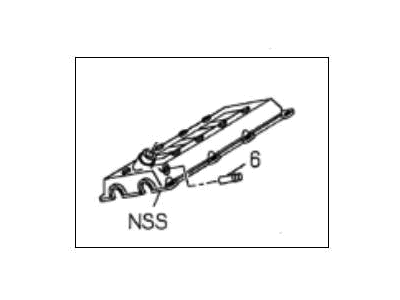
 Product Specifications
- Replaced by: 8-97321-301-0
- Item Weight: 3.90 Pounds
- Item Dimensions: 18.2 x 8.8 x 5.3 inches
- Condition: New
- Fitment Type: Direct Replacement
- SKU: 8-97228-896-0
- Warranty: This genuine part is guaranteed by Honda's factory warranty.
- Product Specifications
- Replaced by: 8-97321-299-0
- Item Weight: 4.00 Pounds
- Item Dimensions: 18.5 x 8.6 x 5.3 inches
- Condition: New
- Fitment Type: Direct Replacement
- SKU: 8-97187-664-0
- Warranty: This genuine part is guaranteed by Honda's factory warranty.
2000 Honda Passport Valve Cover
Our website is the optimal online store for when you need any genuine 2000 Honda Passport Valve Cover. We offer a wide range of 2000 Honda Passport Valve Cover at unbeatable prices. We will help provide you with a worry-free shopping experience at highly competitive prices. In addition, all OEM parts are backed by the manufacturer's warranty.
2000 Honda Passport Valve Cover Parts Questions & Experts Answers
- Q:How to remove and install the Valve Cover on 3.1L V6 engine on 2000 Honda Passport?Posted by Hebiezel E.A:Disconnect the negative cable from the battery, then remove the air cleaner assembly. Label and disconnect the wires and hoses that would interfere with the removal of the valve cover(s). Label and detach the spark plug wires, unclip the wire retainers from the studs, and disconnect the throttle, cruise control, and TVS cables along with the bracket at the TBI unit. If necessary for clearance, remove the air conditioning compressor bracket. Disconnect the PCV valve and the vacuum pipe at the manifold; if removing a left cover, it may be necessary to disconnect the fuel lines from the throttle body. For clearance, if needed, remove the alternator, and if removing the right cover, also remove the ignition coil and bracket. Remove the six valve cover mounting bolts/nuts and detach the cover, using a deep socket for bolts with studs attached. If the cover is stuck, use a soft-face hammer or a block of wood and a hammer to dislodge it, and if it still won't come loose, carefully pry with a putty knife without distorting the sealing flange surface. Clean all traces of old gasket and sealant with a scraper, then clean the mating surfaces with lacquer thinner or acetone. For models using ATV sealant instead of a gasket, apply a 1/8-inch bead of sealant to the cover flange, ensuring it surrounds the inside of the bolt holes to prevent oil leaks. For models using gaskets, place a small amount of ATV sealant on the seam area where the cylinder head and intake manifold meet before installing the gasket. Install the cover(s) while the sealant is still wet, tightening the bolts in 1/4-turn increments until the specified torque is reached. Reinstall the remaining parts in reverse order of removal, then run the engine and check for oil leaks.Answered by Honda Parts Specialist Emanuel / Jul 29, 2023
Related 2000 Honda Passport Parts
 2000 Honda Passport Valve Cover Gasket
 2000 Honda Passport Timing Cover
 2000 Honda Passport Cylinder Head Gasket
 2000 Honda Passport Cylinder Head
 2000 Honda Passport Dipstick
 2000 Honda Passport Camshaft
 2000 Honda Passport PCV Valve
 2000 Honda Passport Camshaft Seal
 2000 Honda Passport Valve Stem Seal