×
- Hello
- Login or Register
- Quick Links
- Live Chat
- Track Order
- Parts Availability
- RMA
- Help Center
- Contact Us
- Shop for
- Honda Parts
- Honda Accessories

My Garage
My Account
Cart
Genuine 2002 Honda Passport Fuel Pump
Gas Pump- Select Vehicle by Model
- Select Vehicle by VIN
Select Vehicle by Model
orMake
Model
Year
Select Vehicle by VIN
For the most accurate results, select vehicle by your VIN (Vehicle Identification Number).
1 Fuel Pump found
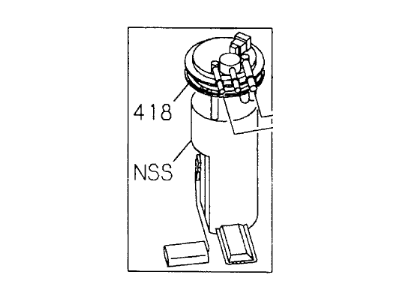
 Product Specifications
- Other Name: Fuel Pump Assembly
- Replaces: 8-25336-451-1, 8-25341-208-0, 8-25336-451-2
- Item Weight: 4.00 Pounds
- Item Dimensions: 18.7 x 8.8 x 9.0 inches
- Condition: New
- Fitment Type: Direct Replacement
- SKU: 8-98032-171-0
- Warranty: This genuine part is guaranteed by Honda's factory warranty.
2002 Honda Passport Fuel Pump
Our website is the optimal online store for when you need any genuine 2002 Honda Passport Fuel Pump. We offer a wide range of 2002 Honda Passport Fuel Pump at unbeatable prices. We will help provide you with a worry-free shopping experience at highly competitive prices. In addition, all OEM parts are backed by the manufacturer's warranty.
2002 Honda Passport Fuel Pump Parts Questions & Experts Answers
- Q:How check fuel pump and perform a fuel pressure test on fuel iniected engine on 2002 Honda Passport?Posted by Garvin P.A:To execute fuel pressure test, you are required to have a fuel pressure gauge and adapter set. Start with a pre-flight inspection: unscrew the fuel filler cap and, with an assistant turning the ignition key ON while you hear the fuelling pump priming, a whirring sound will be heard. In case of no sound, examine the fuel pump fuse; if-blown, replace it and observe its intermittent blowing. If so the circuit must be evaluated further, and the battery voltage should be checked on the fuel pump relay connector. Should there be voltage and the relay operate, inspect for voltage at the fuel pump electrical connector with the engine cranked. If voltage is no present check the fuel pump circuit; if voltage is present and the ground circuit is good replace the pump. In the operating pressure check, discharge the fuel system pressure and . Connect the fuel pressure gauge to the fuel rail depending on the type of the engine of the car in use. Connect back the negative terminal of the battery and cranking the engine, observe the fuel pressure at idle condition. For 2.2L, 2.6L and 3.2 L engines remove the vacuum line to monitor pressure fluctuations. If pressure is low, clamp the fuel return line; if pressure goes up, the regulator is bad. If pressure is high, stop the engine and shut the return line; look for obstructions. For some particular engines, check the pressure changes with vacuum applied with the help of the hand-held vacuum pump at the fuel pressure regulator. Ensure that vacuum is present at the regulator with the engine running; Lack of it call for checking clogs and leakages. If vacuum is satisfactory, change the regulator. Last and being sure that the ignition is off, check the pressure: when pressure is zero its possible that the fuel lines, regulator, injectors or pump is leaking.Answered by Honda Parts Specialist Emanuel / Jan 13, 2022
Related 2002 Honda Passport Parts
 2002 Honda Passport Throttle Body
 2002 Honda Passport Fuel Tank
 2002 Honda Passport Fuel Injector
 2002 Honda Passport Fuel Rail
 2002 Honda Passport Throttle Body Gasket
 2002 Honda Passport Fuel Injector O-Ring