×
- Hello
- Login or Register
- Quick Links
- Live Chat
- Track Order
- Parts Availability
- RMA
- Help Center
- Contact Us
- Shop for
- Honda Parts
- Honda Accessories

My Garage
My Account
Cart
Genuine 2007 Honda Odyssey Speed Sensor
Speed Control Sensor- Select Vehicle by Model
- Select Vehicle by VIN
Select Vehicle by Model
orMake
Model
Year
Select Vehicle by VIN
For the most accurate results, select vehicle by your VIN (Vehicle Identification Number).
6 Speed Sensors found
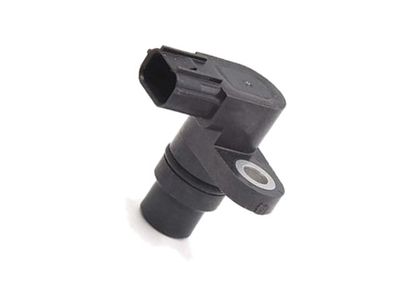


2007 Honda Odyssey Pick-Up Assembly (Matsushita)
Part Number: 28810-RWE-003$124.71 MSRP: $180.73You Save: $56.02 (31%)Product Specifications- Item Weight: 0.30 Pounds
- Item Dimensions: 1.8 x 1.6 x 1.6 inches
- Condition: New
- Fitment Type: Direct Replacement
- SKU: 28810-RWE-003
- Warranty: This genuine part is guaranteed by Honda's factory warranty.


2007 Honda Odyssey Pick-Up Assembly (Matsushita)
Part Number: 28820-RWE-003$130.30 MSRP: $188.84You Save: $58.54 (31%)Product Specifications- Item Weight: 0.30 Pounds
- Item Dimensions: 2.1 x 0.8 x 0.6 inches
- Condition: New
- Fitment Type: Direct Replacement
- SKU: 28820-RWE-003
- Warranty: This genuine part is guaranteed by Honda's factory warranty.


2007 Honda Odyssey Right Front Sensor Assembly
Part Number: 57450-SHJ-A02$59.30 MSRP: $83.76You Save: $24.46 (30%)Product Specifications- Other Name: Front Speed Sensor; ABS Sensor Wire
- Position: Passenger Side
- Item Weight: 0.20 Pounds
- Item Dimensions: 7.9 x 6.8 x 1.0 inches
- Condition: New
- Fitment Type: Direct Replacement
- SKU: 57450-SHJ-A02
- Warranty: This genuine part is guaranteed by Honda's factory warranty.


2007 Honda Odyssey Left Front Sensor Assembly
Part Number: 57455-SHJ-A02$59.30 MSRP: $83.76You Save: $24.46 (30%)Product Specifications- Other Name: Front Speed Sensor; ABS Sensor Wire
- Position: Driver Side
- Item Weight: 0.20 Pounds
- Item Dimensions: 4.7 x 4.1 x 1.5 inches
- Condition: New
- Fitment Type: Direct Replacement
- SKU: 57455-SHJ-A02
- Warranty: This genuine part is guaranteed by Honda's factory warranty.


2007 Honda Odyssey Left Rear Sensor Assembly
Part Number: 57475-SHJ-A05$57.02 MSRP: $80.54You Save: $23.52 (30%)Product Specifications- Other Name: Rear Speed Sensor; ABS Sensor Wire
- Position: Driver Side
- Replaces: 57475-SHJ-A04
- Item Weight: 0.40 Pounds
- Item Dimensions: 8.0 x 6.1 x 1.3 inches
- Condition: New
- Fitment Type: Direct Replacement
- SKU: 57475-SHJ-A05
- Warranty: This genuine part is guaranteed by Honda's factory warranty.


2007 Honda Odyssey Right Rear Sensor Assembly
Part Number: 57470-SHJ-A05$57.02 MSRP: $80.54You Save: $23.52 (30%)Product Specifications- Other Name: Rear Speed Sensor; ABS Sensor Wire
- Position: Passenger Side
- Replaces: 57470-SHJ-A04
- Item Weight: 0.40 Pounds
- Item Dimensions: 7.8 x 6.2 x 1.3 inches
- Condition: New
- Fitment Type: Direct Replacement
- SKU: 57470-SHJ-A05
- Warranty: This genuine part is guaranteed by Honda's factory warranty.
2007 Honda Odyssey Speed Sensor
Our website is the optimal online store for when you need any genuine 2007 Honda Odyssey Speed Sensor. We offer a wide range of 2007 Honda Odyssey Speed Sensor at unbeatable prices. We will help provide you with a worry-free shopping experience at highly competitive prices. In addition, all OEM parts are backed by the manufacturer's warranty.
2007 Honda Odyssey Speed Sensor Parts Questions & Experts Answers
- Q:What is the purpose and function of the anti-lock brake system and how to remove and install Speed Sensor on 2007 Honda Odyssey?Posted by Adeola B.A:This is a kind of brake control system that seeks to provide maximum steer ability, directional stability, and appropriate braking force in most road surface or severance braking condition by measuring wheel speed and modulation of brake line pressure so as to avoid wheel lockup condition. It consists of three main components: include wheel speed sensors, an electronic control unit (ECU and a hydraulic unit. Every wheel has its own speed sensor which transmits variable voltage to the control unit; the latter, in turn, decides whether a wheel is going to lock and asks the hydraulic unit to decrease pressure. In case an issue occurs, an 'ABS' warning lamp will appear on the car's home screen, and by physically checking the ABS wiring harness, especial around the wheels, one may be able to notice signs of rubbing or harm. The ignition should be off before disconnecting, or reconnecting any cables or before disconnecting or reconnecting any wiring. Should the warning light come on during operation, then there is a problem with the ABS and preliminary diagnosis involves checking on the break fluid and making sure that all electrical connections are tight, checking the fuses and wiring harnesses. However, if the indicated checks do not help to solve the problem, the system should be diagnosed by a qualified technician. Prior to the removal of wheel speed sensor, the lug nuts of the wheel need to be loosened and the vehicle needs to be raised from ground and the wheel needs to be taken off. Make sure that ignition is off, then locate and undo the sensor wiring harness, then disconnect the electrical connector and then undo the mounting bolt of the sensor to pull it out. Installation is diametrically the opposite-all components should be tightly screwed unto the appropriate surfaces.Answered by Honda Parts Specialist Preston / Jul 18, 2025
