×
- Hello
- Login or Register
- Quick Links
- Live Chat
- Track Order
- Parts Availability
- RMA
- Help Center
- Contact Us
- Shop for
- Honda Parts
- Honda Accessories

My Garage
My Account
Cart
Genuine 2013 Honda Fit Engine
- Select Vehicle by Model
- Select Vehicle by VIN
Select Vehicle by Model
orMake
Model
Year
Select Vehicle by VIN
For the most accurate results, select vehicle by your VIN (Vehicle Identification Number).
2 Engines found
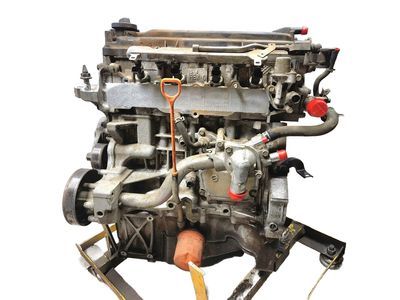
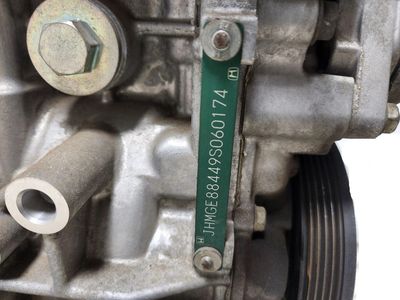
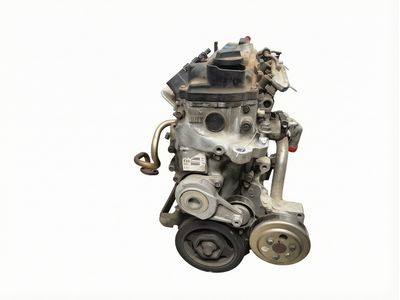
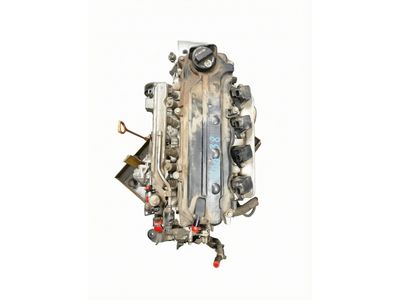


2013 Honda Fit Cylinder Block General Assembly
Part Number: 10002-RP3-A50$8191.79 MSRP: $11055.05You Save: $2863.26 (26%)Product Specifications- Other Name: Short Block
- Item Weight: 105.20 Pounds
- Item Dimensions: 25.5 x 21.1 x 19.9 inches
- Condition: New
- Fitment Type: Direct Replacement
- SKU: 10002-RP3-A50
- Warranty: This genuine part is guaranteed by Honda's factory warranty.

2013 Honda Fit Cylinder Block General Assembly
Part Number: 10002-RP3-A00$8191.79 MSRP: $11055.05You Save: $2863.26 (26%)Product Specifications- Other Name: Short Block
- Item Weight: 103.20 Pounds
- Item Dimensions: 25.5 x 21.5 x 19.9 inches
- Condition: New
- Fitment Type: Direct Replacement
- SKU: 10002-RP3-A00
- Warranty: This genuine part is guaranteed by Honda's factory warranty.
2013 Honda Fit Engine
Our website is the optimal online store for when you need any genuine 2013 Honda Fit Engine. We offer a wide range of 2013 Honda Fit Engine at unbeatable prices. We will help provide you with a worry-free shopping experience at highly competitive prices. In addition, all OEM parts are backed by the manufacturer's warranty.
2013 Honda Fit Engine Parts Questions & Experts Answers
- Q:How to remove and install Engine on 2013 Honda Fit?Posted by Ankit P.A:Removal of engines is often not a simple process, especially for the do-it-yourself individuals intending to do so in the comfort of their backyard. The engine and transaxle are therefore inter-connected at the bottom and require the use of a frame-contact type hoist in lifting them. Start with positioning the car on a hoist and lifting up the arms to the jacking points but no lifting of the car at this point. Disconnect the battery if present and remove the tray and engine cover if fitted. Drain the engine oil and coolant, and also undo the front wheel nuts, then jack the vehicle up for the removal of the front wheels and splash guards. Remove transaxle oil, detach the hydraulic pipes in the manual models, and take off the air filter housing. For 2009 and later models remove the cowl cover; for 2008 and earlier models look at the passenger side footwell for the removal of a number of connectors. Remove blower case nuts and detach main harness and feed connectors through the firewall onto the cowl. Remove starter and battery cables, the brake booster vacuum, several connectors at the throttle body. During the model with manual transmission, the shift cables, clutch and the downstream oxygen sensor, drive belt have to be removed. Lift the vehicle once more to delete the under-vehicle splash shield and the catalytic converter; disconnect the shift lever cover and the air conditioning compressor but not the hoses. Take out drive axles and lower the vehicle further in order to remove the condenser and radiator fans. Remove the connecting hoses of the oil cooler in auto transmission models, the radiator as well as the heater hoses and tighten an engine support fixture on the engine. Lift up the vehicle, unbolt the front subframe and then use the hoist to lift up the engine/transaxle combination in such a way that they must be balanced and safe to be handled. Lower the assembly to the floor and check for any connections after that using a hoist and then disconnect it. Lift the vehicle once more for supporting the assembly for movement, next step is to remove the connection of the transaxle with the engine after which the engine should be mounted on a lift stand. For removal, reverse all the installation steps and while doing so, ensure that the mounts are worn out and need replacement, secure the transaxle and tighten all the identified bolts and replace all fluids while checking the level.Answered by Honda Parts Specialist Eric / Jan 30, 2026
Related 2013 Honda Fit Parts
 2013 Honda Fit Valve Cover Gasket
 2013 Honda Fit Oil Pan
 2013 Honda Fit Cylinder Head
 2013 Honda Fit Intake Manifold Gasket
 2013 Honda Fit Cylinder Head Gasket
 2013 Honda Fit Camshaft
 2013 Honda Fit Crankshaft
 2013 Honda Fit Transmission Assembly
 2013 Honda Fit Engine Block
 2013 Honda Fit Transmission Gasket