×
- Hello
- Login or Register
- Quick Links
- Live Chat
- Track Order
- Parts Availability
- RMA
- Help Center
- Contact Us
- Shop for
- Honda Parts
- Honda Accessories

My Garage
My Account
Cart
Genuine 1995 Honda Passport Intake Manifold
Engine Intake Manifold- Select Vehicle by Model
- Select Vehicle by VIN
Select Vehicle by Model
orMake
Model
Year
Select Vehicle by VIN
For the most accurate results, select vehicle by your VIN (Vehicle Identification Number).
2 Intake Manifolds found
 Product Specifications
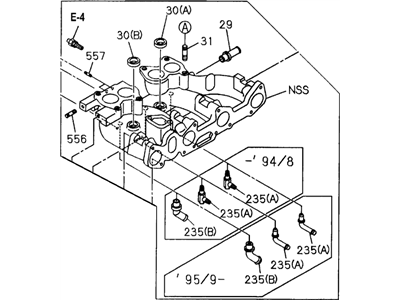
- Other Name: Intake Manifold
- Replaces: 8-97070-556-2, 8-97070-556-3, 8-97070-556-1
- Item Weight: 7.00 Pounds
- Item Dimensions: 16.7 x 11.8 x 7.7 inches
- Condition: New
- Fitment Type: Direct Replacement
- SKU: 8-97070-556-4
- Warranty: This genuine part is guaranteed by Honda's factory warranty.
 Product Specifications
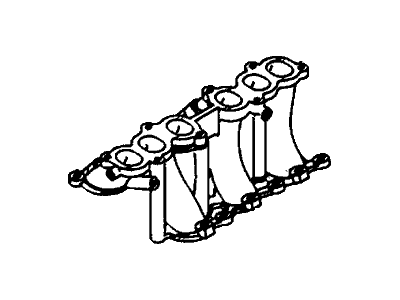
- Item Weight: 7.40 Pounds
- Item Dimensions: 16.1 x 9.7 x 5.6 inches
- Condition: New
- Fitment Type: Direct Replacement
- SKU: 8-94376-248-1
- Warranty: This genuine part is guaranteed by Honda's factory warranty.
1995 Honda Passport Intake Manifold
Our website is the optimal online store for when you need any genuine 1995 Honda Passport Intake Manifold. We offer a wide range of 1995 Honda Passport Intake Manifold at unbeatable prices. We will help provide you with a worry-free shopping experience at highly competitive prices. In addition, all OEM parts are backed by the manufacturer's warranty.
1995 Honda Passport Intake Manifold Parts Questions & Experts Answers
- Q:How to remove and install Intake Manifold on 2.3L and 2.6L four cylinder engine on 1995 Honda Passport?Posted by Abigayle W.A:Said gasket must be replaced anytime either manifold is removed because of air leakage as well as possible scratching of the valves, and the work must be done on a cold engine as a rule. Start with the removal of the negative battery terminal and with the subsequent evacuation of the cooling system. disconnected all the electrical connections from the air cleaner and tagged each line and hoses before disconnecting so that it will be easier in reconnection. Remove the fuel and vacuum line from the carburetor or fuel pipe and throttle valve assembly, cap the fuel line to avoid leakage and intake of dirt. Remove all intake hoses from the intake manifold, remove wires from the carburetor or fuel injection connector, and the brake booster vacuum hose. On carbureted engines remove the carburella the EGA pipe clamp bolt located at the back of the cylinder head and then chock the wheel, place the car on jack stands. Unbolt and take out the EGA pipe that is attached to the intake and exhaust manifolds, after that, get under the car and unscrew the EGA valve and bracket assembly from the underside of the intake manifold. After having lowered the vehicle, unscrew the upper hose of the radiator and the heater hose and, after that, plug it. Them remove all intake manifold mounting nuts with turning the nut pack in quarter turn movements. For fuel injected engines, the intake air plenum is detached by unplugging the EGA line from under the plenum and then removing the nuts which hold the plenum then lifting it out of the intake manifold then removing the throttle body from the intake air plenum. Shove shop towels into the holes in the intake manifold and be sure and remove all remnants of old gasket material. First, take off the upper intake manifold, then take off the EGA pipe from the exhaust manifold and then note and detach all vacuum lines and hoses. Pull the upper radiator hose aside, undo the fuel rail bolts and then take off the fuel rail from the injectors. Half an hour is enough to loosen and remove the upper nuts of the intake manifold, then go under the car to remove the lower nuts that retain the manifold to the engine and then simply lift up the manifold. Before installing the manifold(s) stuff clean, lint-free rags into the engine ports and clean the manifold faces surfaces of any old gasket and sealant. Position the lower intake manifold on the cylinder head and bolt them up; do not over tighten the bolts as it will hold the manifold in place. After it has been placed, make sure to tighten the mounting bolts to the torque required and in turn, do it in steps, normally three to four times around the middle to the outer ends. The air intake plenum for fuel injected engines must be fitted with a new gasket, then the plenum's retaining nuts must be tightened to the required turn. The rest of the installation is done in the opposite of the removal process. Last but not least is adding the coolant into the radiator, switching on the engine and look for any sign of leakage and correct the idle speed and the throttle linkage that is connected to it.Answered by Honda Parts Specialist Daren / Jun 13, 2024
