×
- Hello
- Login or Register
- Quick Links
- Live Chat
- Track Order
- Parts Availability
- RMA
- Help Center
- Contact Us
- Shop for
- Honda Parts
- Honda Accessories

My Garage
My Account
Cart
Genuine Honda Passport Intake Manifold
Engine Intake Manifold- Select Vehicle by Model
- Select Vehicle by VIN
Select Vehicle by Model
orMake
Model
Year
Select Vehicle by VIN
For the most accurate results, select vehicle by your VIN (Vehicle Identification Number).
8 Intake Manifolds found
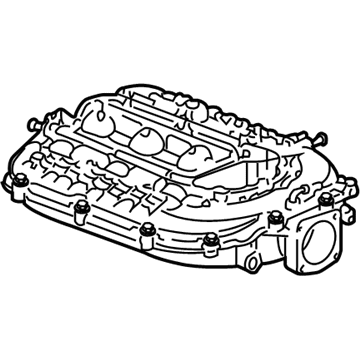
Honda Passport Intake Manifold
Part Number: 17160-5MR-A00$175.79 MSRP: $254.76You Save: $78.97 (31%)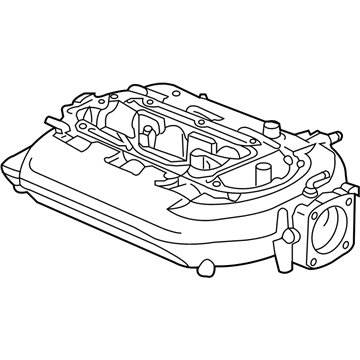
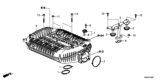
Honda Passport Intake Manifold
Part Number: 17160-RLV-A00$301.47 MSRP: $440.76You Save: $139.29 (32%)
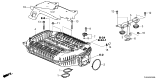
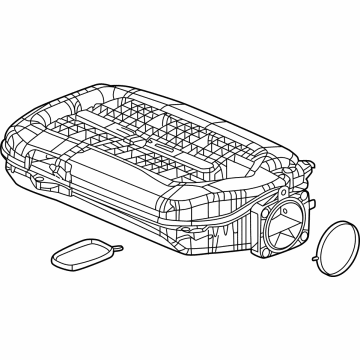
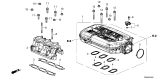
Honda Passport MANIFOLD SUB-ASSY
Part Number: 17020-6FB-A01$189.81 MSRP: $275.09You Save: $85.28 (31%)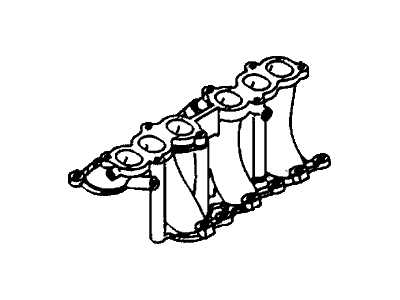

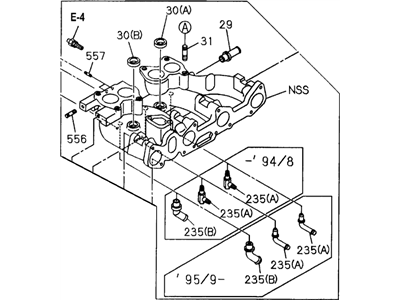

Honda Passport Intake Manifold
Intake Manifold involves in supply of air or a mixture of air and fuel to the cylinder in Honda Passport automobile in relation to the engine power. It works by drawing air from the throttle body or carburetor depending with the engine type, the designs may vary. For instance, the older car models may employ carburetors or Throttle Body Injection (TBI), whereas the latest Honda Passport has multi-point fuel injection or may use Gasoline Direct Injection (GDI) that provides only air to the pistons. Early types of Honda Passport Intake Manifolds were made from cast iron or aluminum but today, the noticeable trends are the use of light weight composite plastics resulting to fuel efficiency and cool air intake. Intake manifolds vary in length and its specific length varies depending with the load it has to carry in some models. In general, it is possible to appear that changes in the Honda Passport Intake Manifold represent progress in the material production and technical solutions to provide more efficient engines and additional power.
In search of affordable OEM Honda Passport Intake Manifold? Consider browsing through our extensive inventory of genuine Honda Passport Intake Manifold. Not only do we provide market-leading prices and a manufacturer's warranty, but we also pride ourselves on exceptional customer service and swift delivery.
Honda Passport Intake Manifold Parts Questions & Experts Answers
- Q:How to remove and install the air intake plenum and lower intake manifold on 3.2L V6 engine on Honda Passport?A:To disconnect, remove and uninstall air intake plenum and lower intake manifold, one has to discharge the fuel system pressure, and the negative battery cable should be disconnected. Disconnect the air cleaner assembly and the throttle body, the fuel lines and connectors of each injector. It is recommended that if upper and lower intake manifolds are removed for gasket exchanges or upper engine work only, install the air intake plenum's throttle body and remove both simultaneously. Remove the electrical connectors from the manifold absolute pressure sensor, power switch, and the electronic vacuum sensing valve, if there is a throttle body it is necessary to remove the idle air control valve and throttle position sensor connectors. Remove the accelerator cable and transmission linkage from the throttle body assembly, vacuum the brake booster hose and cut all vacuum lines coming to it and the rest of the vacuum lines as the EVAP canister purge, PCV valve, EGR valve, and fuel pressure regulator. There is no need for an elaborate procedure at this point: you must only unscrew the bolts and nuts of the plenum, and then get the air intake plenum off the lower intake manifold. For the lower intake manifold, it is necessary to disjoint the fuel supply and return hoses, to disconnect the connectors from the fuel injectors and to unbolt and un-nut the manifold. Tap at a corner of the manifold to disturb the gasket seal without compromising on the sealing zones. For installation, the surfaces of the mating members should be clean, the gasket can be chemically removed by using gasket removal solvents, also clean the bolt holes. Place the new gaskets on the Cylinder Heads and locate the manifold into the position without removing the gaskets; then install bolts, washers, and nuts and over tighten according to the torque. Replace the lower intake manifold gasket on the air intake plenum and locate it into position securing it, and fasten the intake bolts. Last of all, switch on the engine and look at the leakages of the oil and coolant at the intake manifold joints.