×
- Hello
- Login or Register
- Quick Links
- Live Chat
- Track Order
- Parts Availability
- RMA
- Help Center
- Contact Us
- Shop for
- Honda Parts
- Honda Accessories

My Garage
My Account
Cart
Genuine 2008 Honda Fit Axle Shaft
Car Axle Shaft- Select Vehicle by Model
- Select Vehicle by VIN
Select Vehicle by Model
orMake
Model
Year
Select Vehicle by VIN
For the most accurate results, select vehicle by your VIN (Vehicle Identification Number).
5 Axle Shafts found


2008 Honda Fit Passenger Side Driveshaft Assembly
Part Number: 44305-SLN-A00$769.83 MSRP: $937.35You Save: $167.52 (18%)Product Specifications- Other Name: Axle Assembly
- Position: Passenger Side
- Item Weight: 22.20 Pounds
- Item Dimensions: 44.1 x 6.1 x 6.3 inches
- Condition: New
- Fitment Type: Direct Replacement
- SKU: 44305-SLN-A00
- Warranty: This genuine part is guaranteed by Honda's factory warranty.
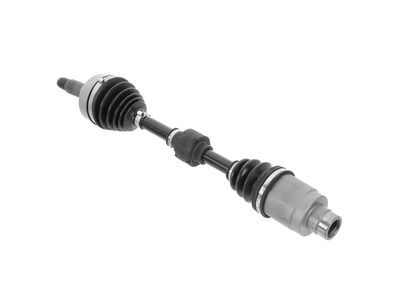
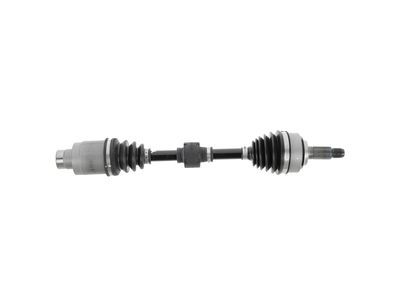
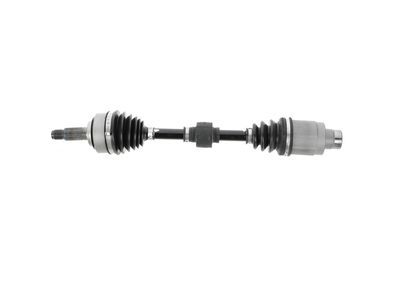
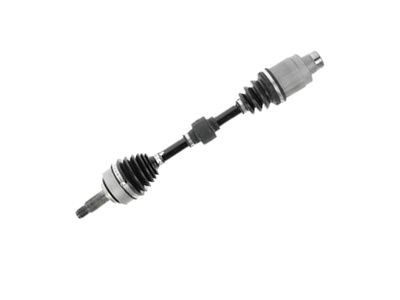


2008 Honda Fit Passenger Side Driveshaft Assembly
Part Number: 44305-SLN-L00$828.83 MSRP: $1211.73You Save: $382.90 (32%)Product Specifications- Other Name: Axle Assembly
- Position: Passenger Side
- Replaced by: 44305-SLN-305
- Item Weight: 11.90 Pounds
- Item Dimensions: 26.3 x 5.8 x 5.0 inches
- Condition: New
- Fitment Type: Direct Replacement
- SKU: 44305-SLN-L00
- Warranty: This genuine part is guaranteed by Honda's factory warranty.


2008 Honda Fit Driver Side Driveshaft Assembly
Part Number: 44306-SLN-L00$751.80 MSRP: $1099.11You Save: $347.31 (32%)Product Specifications- Other Name: Axle Assembly
- Position: Driver Side
- Replaced by: 44306-SLN-305
- Item Weight: 13.00 Pounds
- Item Dimensions: 27.4 x 5.3 x 4.5 inches
- Condition: New
- Fitment Type: Direct Replacement
- SKU: 44306-SLN-L00
- Warranty: This genuine part is guaranteed by Honda's factory warranty.

2008 Honda Fit Half Shaft Assembly
Part Number: 44500-SLN-L00$464.98 MSRP: $679.81You Save: $214.83 (32%)Product Specifications- Other Name: Intermediate Shaft; Intermed Shaft
- Item Weight: 8.60 Pounds
- Item Dimensions: 19.1 x 10.8 x 7.8 inches
- Condition: New
- Fitment Type: Direct Replacement
- SKU: 44500-SLN-L00
- Warranty: This genuine part is guaranteed by Honda's factory warranty.

 Product Specifications
- Other Name: Axle Assembly
- Position: Driver Side
- Item Weight: 17.80 Pounds
- Item Dimensions: 43.7 x 6.1 x 4.5 inches
- Condition: New
- Fitment Type: Direct Replacement
- SKU: 44306-SAA-E00
- Warranty: This genuine part is guaranteed by Honda's factory warranty.
2008 Honda Fit Axle Shaft
Our website is the optimal online store for when you need any genuine 2008 Honda Fit Axle Shaft. We offer a wide range of 2008 Honda Fit Axle Shaft at unbeatable prices. We will help provide you with a worry-free shopping experience at highly competitive prices. In addition, all OEM parts are backed by the manufacturer's warranty.
2008 Honda Fit Axle Shaft Parts Questions & Experts Answers
- Q:What Are the Functions and Maintenance Requirements for Axle Shafts and CV Joints on 2008 Honda Fit?Posted by Charlton T.A:Power is transmitted from the transaxle to the wheels through a pair of axle shafts which are spline locked to the inner side gears of the differential and the outer ends are splined and locked to the wheel hubs by large nuts. The inner ends consist of CV type special constant velocity joints with trias support and their motions are rotational and axial; the outer joint is the ball-and-cage type. This system, however, requires frequent check-ups for any signs of damage or leakage of the lubricant since a damaged CV joint boot should be replaced immediately. Some of the signs that are associated with worn CV joints include lubricant leakages, a clicking sound while turning and a clunk sound each time the engine is accelerated after coasting, and vibrations on the highway. To inspect the wear in the CV joints and axle shafts, turn each axle independently with your hands in both clockwise and counterclockwise while grasping the CV joint hubs and feel for end play which can be an indication of worn splines or loose CV joints.Answered by Honda Parts Specialist Arvin / Jan 19, 2026
Related 2008 Honda Fit Parts
 2008 Honda Fit Torque Converter
 2008 Honda Fit Wheel Bearing
 2008 Honda Fit Transmission Assembly
 2008 Honda Fit Side Cover Gasket
 2008 Honda Fit Transmission Gasket