×
- Hello
- Login or Register
- Quick Links
- Live Chat
- Track Order
- Parts Availability
- RMA
- Help Center
- Contact Us
- Shop for
- Honda Parts
- Honda Accessories

My Garage
My Account
Cart
Genuine 2009 Honda Fit Engine
- Select Vehicle by Model
- Select Vehicle by VIN
Select Vehicle by Model
orMake
Model
Year
Select Vehicle by VIN
For the most accurate results, select vehicle by your VIN (Vehicle Identification Number).
2 Engines found
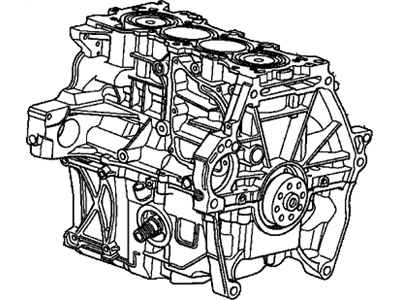
2009 Honda Fit Cylinder Block General Assembly
Part Number: 10002-RP3-A00$8191.79 MSRP: $11055.05You Save: $2863.26 (26%)Product Specifications- Other Name: Short Block
- Item Weight: 103.20 Pounds
- Item Dimensions: 25.5 x 21.5 x 19.9 inches
- Condition: New
- Fitment Type: Direct Replacement
- SKU: 10002-RP3-A00
- Warranty: This genuine part is guaranteed by Honda's factory warranty.
2009 Honda Fit Cylinder Block General Assembly
Part Number: 10002-RP3-A50$8191.79 MSRP: $11055.05You Save: $2863.26 (26%)Product Specifications- Other Name: Short Block
- Item Weight: 105.20 Pounds
- Item Dimensions: 25.5 x 21.1 x 19.9 inches
- Condition: New
- Fitment Type: Direct Replacement
- SKU: 10002-RP3-A50
- Warranty: This genuine part is guaranteed by Honda's factory warranty.
2009 Honda Fit Engine
Our website is the optimal online store for when you need any genuine 2009 Honda Fit Engine. We offer a wide range of 2009 Honda Fit Engine at unbeatable prices. We will help provide you with a worry-free shopping experience at highly competitive prices. In addition, all OEM parts are backed by the manufacturer's warranty.
2009 Honda Fit Engine Parts Questions & Experts Answers
- Q:What preliminary steps should be taken before removing an engine for overhaul or major repair work on 2009 Honda Fit?Posted by Leonor O.A:Before an engine is to be removed for overhaul or major work several preliminary measures should be followed,-One should read over all the removal and installation instructions very carefully. Choosing the right place for working is exceptionally authoritative, as the space must be sufficient for parking the vehicle and tools; if it is impossible to have a shop or a garage, the right place must be a flat, clean, and even naked surface created from concrete or asphalt. The engine is lowered along with the transaxle and then the vehicle is raised enough to slip out this assembly, this needs a vehicle hoist. An engine hoist that has a rating greater than the total weight of both the engine and the transaxle are also required, because safety is paramount when dealing with such an operation because of the dangers inherent to it. It will be useful for tools to be kept in order; this requires encasing items that are sensitive to water before starting the removal and using a misting cleaner, especially on oily regions, followed by wiping and drying major parts. If inexperienced, simply having at least one helper is good enough because it will be quite impractical for a single person to attempt to take out a heavy engine and transaxle assembly; it is helpful to consult an experienced person. Preparation prior to the beginning of the 'big operation' involves going for essentials like an efficient engine stand, a vehicle hoist, an engine hoist, a heavy-duty floor jack with a transmission jack head adaptor, an assortment of wrenches and sockets, wooden cradles and enough rags and cleaning liquid to mop up any spills. Also it should be expected that the vehicle will be out of use for quite a long time and it is suggested to consult a machine shop about the probable time that may take for any sort of rebuilding or repairs where the engine has to be removed.Answered by Honda Parts Specialist Jeremie / Apr 13, 2026
Related 2009 Honda Fit Parts
 2009 Honda Fit Valve Cover Gasket
 2009 Honda Fit Oil Pan
 2009 Honda Fit Cylinder Head
 2009 Honda Fit Intake Manifold Gasket
 2009 Honda Fit Cylinder Head Gasket
 2009 Honda Fit Camshaft
 2009 Honda Fit Crankshaft
 2009 Honda Fit Transmission Assembly
 2009 Honda Fit Engine Block
 2009 Honda Fit Transmission Gasket