×
- Hello
- Login or Register
- Quick Links
- Live Chat
- Track Order
- Parts Availability
- RMA
- Help Center
- Contact Us
- Shop for
- Honda Parts
- Honda Accessories

My Garage
My Account
Cart
Genuine Honda Pilot Connecting Rod
- Select Vehicle by Model
- Select Vehicle by VIN
Select Vehicle by Model
orMake
Model
Year
Select Vehicle by VIN
For the most accurate results, select vehicle by your VIN (Vehicle Identification Number).
6 Connecting Rods found
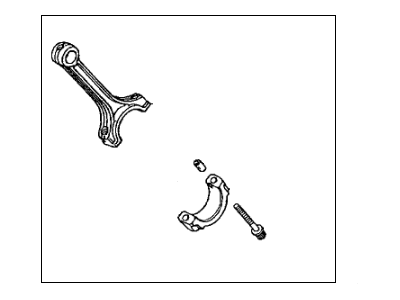
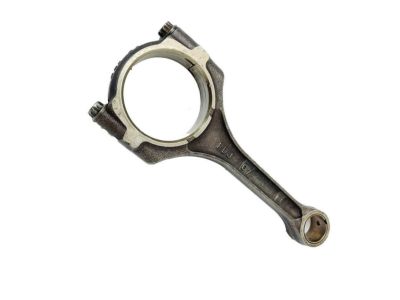
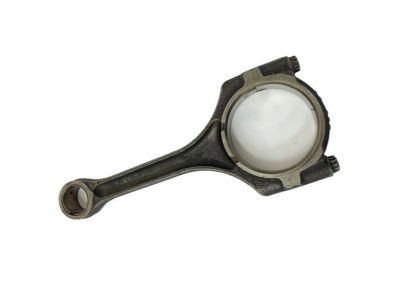
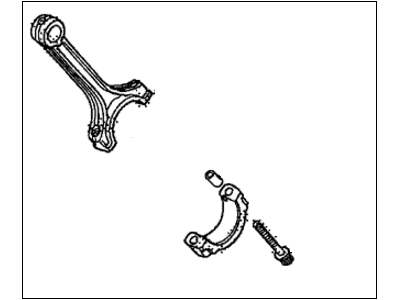
Honda Pilot Connecting Rod
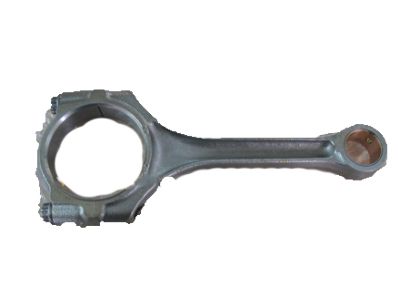
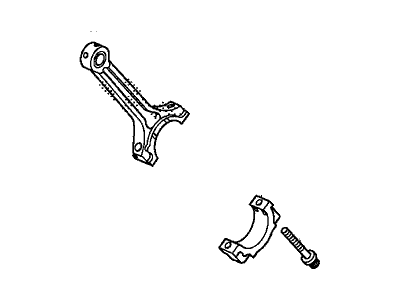
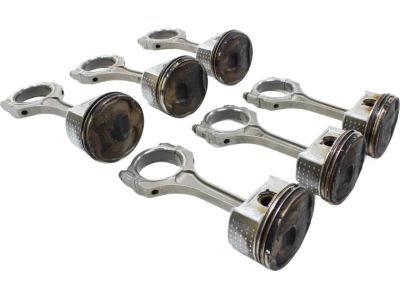
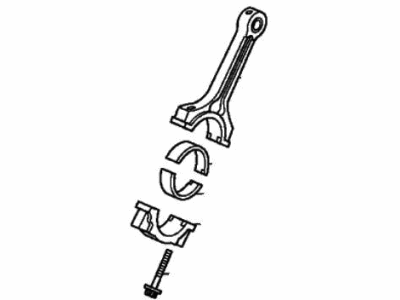
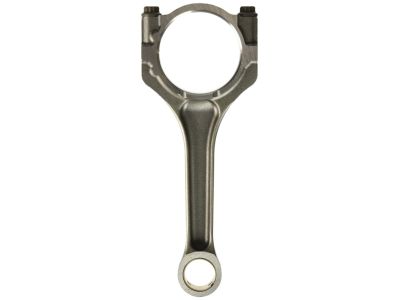
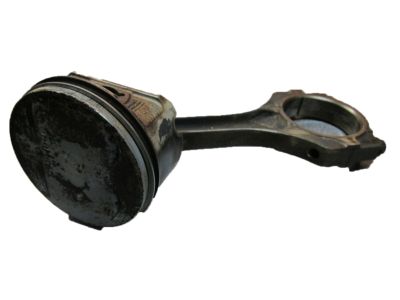
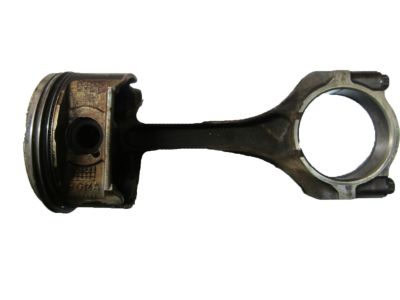
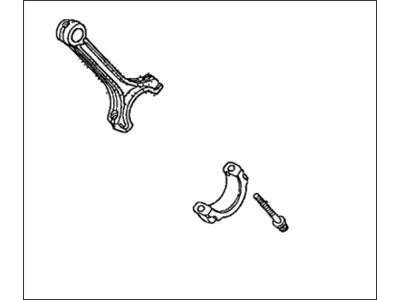
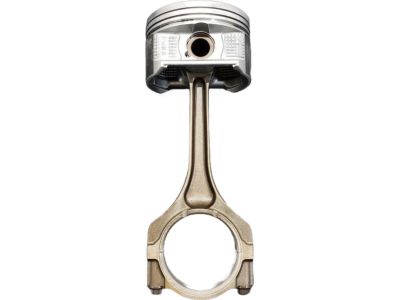
Honda Pilot Connecting Rod is responsible for converting the up and down motion of each piston into the smooth rotation of the crankshaft, the vital link between the force of combustion and the motion of the wheels. Early versions in the Pilot relied on cast iron big and small ends separated by a sturdy beam; it was a cost-effective choice that met daily demands for driving and added weight. Later Honda refinements adopted powdered metal Connecting Rod construction, which provides better bore concentricity and more uniform center-to-center length for quieter operation and improved fuel economy. For higher output Pilot models, Honda specified forged steel pieces shaped either in an I-Beam or lighter H-Beam form, each Connecting Rod using bushed small ends for floating wrist pins and larger diameter bolts that resist tensile shock at elevated RPM. The I-Beam style prefers rigidity for towing or long highway pulls, while the H-Beam reduces mass without reducing strength, allowing the V6 to rev freely and keeping every Connecting Rod balanced between cylinders. Regardless of material, the Connecting Rod's function is to link the piston to the crank throw, channeling both the compression and tension loads as the engine cycles and converting straight line thrust into spinning force that the transmission and final drive can use. Careful machining ensures that rod weights are uniform and Honda quality control secures durable big end bearings so that the Pilot delivers dependable torque mile after mile.
In search of affordable OEM Honda Pilot Connecting Rod? Consider browsing through our extensive inventory of genuine Honda Pilot Connecting Rod. Not only do we provide market-leading prices and a manufacturer's warranty, but we also pride ourselves on exceptional customer service and swift delivery.
Honda Pilot Connecting Rod Parts Questions & Experts Answers
- Q:What Preparations Are Required Before Removing the Connecting Rod and Pistons Assemblies on the Honda Pilot?A:Before removing piston/connecting rod assemblies, ridges on cylinder walls must be removed and the engine positioned with the Crankshaft up. The connecting rod endplay should be checked and rods and caps marked. The cap bolts are partially loosened before removal to prevent damage. The piston/connecting rod assemblies are then removed and sent for inspection and overhaul. Installation involves verifying ring end gaps, lubricating piston and rings, and using a piston ring compressor for placement. Connecting rod bearing oil clearance is checked before final installation. Cleanliness, part identification, lubrication, and attention to detail are crucial.
Related Honda Pilot Parts
 Honda Pilot Engine
 Honda Pilot Pistons
 Honda Pilot Rod Bearing
 Honda Pilot Crankshaft Pulley
 Honda Pilot Harmonic Balancer
 Honda Pilot Crankshaft
 Honda Pilot Timing Chain Guide
 Honda Pilot Engine Block
 Honda Pilot Piston Rings
 Honda Pilot Crankshaft Thrust Washer Set
Browse by Year
2025 Connecting Rod 2024 Connecting Rod 2023 Connecting Rod 2022 Connecting Rod 2021 Connecting Rod 2020 Connecting Rod 2019 Connecting Rod 2018 Connecting Rod 2017 Connecting Rod 2016 Connecting Rod 2015 Connecting Rod 2014 Connecting Rod 2013 Connecting Rod 2012 Connecting Rod 2011 Connecting Rod 2010 Connecting Rod 2009 Connecting Rod 2008 Connecting Rod 2007 Connecting Rod 2006 Connecting Rod 2005 Connecting Rod 2004 Connecting Rod 2003 Connecting Rod