×
- Hello
- Login or Register
- Quick Links
- Live Chat
- Track Order
- Parts Availability
- RMA
- Help Center
- Contact Us
- Shop for
- Honda Parts
- Honda Accessories

My Garage
My Account
Cart
Genuine Honda Ridgeline Fuel Tank
Gas Tank- Select Vehicle by Model
- Select Vehicle by VIN
Select Vehicle by Model
orMake
Model
Year
Select Vehicle by VIN
For the most accurate results, select vehicle by your VIN (Vehicle Identification Number).
3 Fuel Tanks found
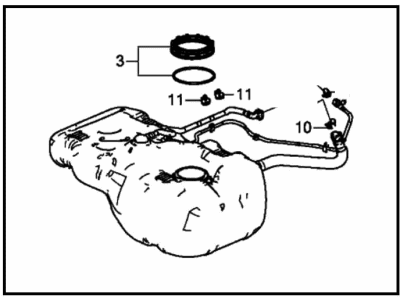
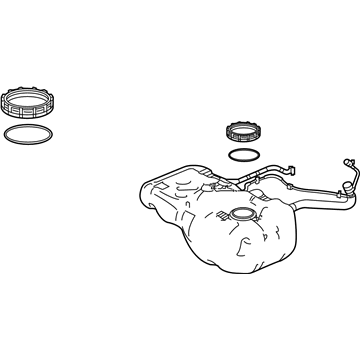
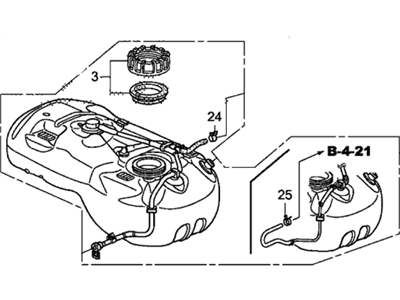
Honda Ridgeline Set, Fuel Tank
Part Number: 17044-SJC-A02$2063.14 MSRP: $3016.29You Save: $953.15 (32%)
Honda Ridgeline Fuel Tank
The Fuel Tank of Honda Ridgeline vehicles is the place where fuel is stored also containing the electric fuel pump and fuel gauge sender. It also has functions for the Evaporative Emission Control System (EVAP) in order not to allow fuel vapor to evaporate. These are usually metal or plastic prepared tanks where the metal ones are usually stamped and welded and the plastic one blow molded from High Density Polyethylene (HDPE). For the safety as well as stability of the tanks each one is factory leakage tested and they include features like the locking ring and seal. Also, high capacity fuel tanks for extended range and military-spec polymer are available to provide up to 500-mile range, corrosion and flexibility superior to steel tanks.
In search of affordable OEM Honda Ridgeline Fuel Tank? Consider browsing through our extensive inventory of genuine Honda Ridgeline Fuel Tank. Not only do we provide market-leading prices and a manufacturer's warranty, but we also pride ourselves on exceptional customer service and swift delivery.
Honda Ridgeline Fuel Tank Parts Questions & Experts Answers
- Q:How to remove and install a fuel tank in a Honda Ridgeline?A:Take off the fuel filler cap to lower fuel tank pressure, then work on the fuel supply system release. Unplug both the connection to the negative battery terminal and the electrical plug from the Fuel Pump and fuel level sending unit module. If there is no more than staleknot fuel or gas left in the fuel tank, you do not need to siphon it. However, if there is a larger amount of fuel, remove the fuel pump/fuel level sending unit and suction up the remaining fuel through the fuel pump's installation hole. Rise the car, place jacks safely beneath it, and take off the rear exhaust part. On 4WD models, remove the driveshaft. Disconnect the bolts or nuts holding the rock guard to the fuel tank, and take off the guard. Twist the fuel supply line quick-connect fitting to disconnect it, keeping in mind there's only one fuel line on these newer models. Slip the hose clamp off both the fuel tank to EVAP canister hose and the fuel filler neck hose. And with that same method, also detach the EVAP hose right above the filler neck hose. Carefully rest the fuel tank, loosen and remove both fuel tank strap bolt and holding strap. Very carefully move the fuel tank down to the ground. When you wash the fuel tank, check the fuel pump inlet strainer and the fuel level sending unit module. To put the fuel tank back where it belongs, make sure your bolts for the strap stay tight. Next, connect the power cable to the battery's negative terminal, turn the engine on, and watch for fuel to spill anywhere.