×
- Hello
- Login or Register
- Quick Links
- Live Chat
- Track Order
- Parts Availability
- RMA
- Help Center
- Contact Us
- Shop for
- Honda Parts
- Honda Accessories

My Garage
My Account
Cart
Genuine 1988 Honda CRX Transmission Assembly
Trans Assembly- Select Vehicle by Model
- Select Vehicle by VIN
Select Vehicle by Model
orMake
Model
Year
Select Vehicle by VIN
For the most accurate results, select vehicle by your VIN (Vehicle Identification Number).
6 Transmission Assemblies found
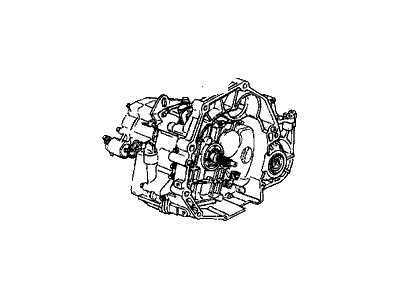
 Product Specifications
- Other Name: Transaxle
- Item Weight: 101.20 Pounds
- Item Dimensions: 19.9 x 17.3 x 17.3 inches
- Condition: New
- Fitment Type: Direct Replacement
- SKU: 20021-PL4-000
- Warranty: This genuine part is guaranteed by Honda's factory warranty.
 Product Specifications
- Item Weight: 76.30 Pounds
- Item Dimensions: 19.1 x 17.7 x 16.8 inches
- Condition: New
- Fitment Type: Direct Replacement
- SKU: 20011-PL3-P40
- Warranty: This genuine part is guaranteed by Honda's factory warranty.
- Product Specifications
- Item Weight: 95.30 Pounds
- Item Dimensions: 25.3 x 23.9 x 16.7 inches
- Condition: New
- Fitment Type: Direct Replacement
- SKU: 20011-PL3-B90
- Warranty: This genuine part is guaranteed by Honda's factory warranty.
- Product Specifications
- Item Weight: 90.90 Pounds
- Item Dimensions: 19.8 x 17.9 x 16.9 inches
- Condition: New
- Fitment Type: Direct Replacement
- SKU: 20011-PL3-B80
- Warranty: This genuine part is guaranteed by Honda's factory warranty.
- Product Specifications
- Item Weight: 76.20 Pounds
- Item Dimensions: 19.4 x 17.1 x 16.8 inches
- Condition: New
- Fitment Type: Direct Replacement
- SKU: 20011-PL3-B70
- Warranty: This genuine part is guaranteed by Honda's factory warranty.
- Product Specifications
- Other Name: Transaxle
- Item Weight: 97.00 Pounds
- Item Dimensions: 25.6 x 23.9 x 16.9 inches
- Condition: New
- Fitment Type: Direct Replacement
- SKU: 20011-PL3-A70
- Warranty: This genuine part is guaranteed by Honda's factory warranty.
1988 Honda CRX Transmission Assembly
Our website is the optimal online store for when you need any genuine 1988 Honda CRX Transmission Assembly. We offer a wide range of 1988 Honda CRX Transmission Assembly at unbeatable prices. We will help provide you with a worry-free shopping experience at highly competitive prices. In addition, all OEM parts are backed by the manufacturer's warranty.
1988 Honda CRX Transmission Assembly Parts Questions & Experts Answers
- Q:How Does the Transmission Assembly Function and Operate in Transmitting Engine Torque and Power to the Drive Wheels on a 1988 Honda CRX?Posted by Evelitce A.A:Depending on the engine's rpm, the automatic transaxle transmits the engine torque and power to the drive wheels, and can provide adequate power and torque at low rpm, sensible rpm at high rpm and all this without driver intervention. It uses a light fluid for power transmission, hydraulic control circuits, and lubrication, and as a result its working should be understood to enable troubleshoot the system. Using the torque converter in place of the normal clutch allows the engine to idle when the gears are engaged, allows for the shifting between the ranges without need to close the throttle, and multiplies the engine torque when vehicle speed is low. It consists of a metal case with three sets of blades: comprising a pump, a turbine and a stator to optimize the flow and multiplication of torque. The planetary gearbox transmits power from the turbine to the half shafts and can offer up to a number of torque multiplication factors that include an outer gear, a sun gear and a number of planet gears. Bearings and couplings secure the parts of the gearsets and shifting is by selective engagement of components. Servos that operate similar to hydraulic actuators use hydraulic pressure to engage the bands or clutches and accumulators that help in cushioning of engagement. The main oil pump feeds the hydraulic control system and delivers the pressure through the shift valves and it regulates the check ball's pressure that controls the servo's valve and match the force called for in the clutch and bands to the engine torque output.Answered by Honda Parts Specialist Preston / Sep 19, 2025
Related 1988 Honda CRX Parts
 1988 Honda CRX Torque Converter
 1988 Honda CRX Valve Body
 1988 Honda CRX Side Cover Gasket
 1988 Honda CRX Transmission Gasket