×
- Hello
- Login or Register
- Quick Links
- Live Chat
- Track Order
- Parts Availability
- RMA
- Help Center
- Contact Us
- Shop for
- Honda Parts
- Honda Accessories

My Garage
My Account
Cart
Genuine 1989 Honda CRX Transmission Assembly
Trans Assembly- Select Vehicle by Model
- Select Vehicle by VIN
Select Vehicle by Model
orMake
Model
Year
Select Vehicle by VIN
For the most accurate results, select vehicle by your VIN (Vehicle Identification Number).
6 Transmission Assemblies found
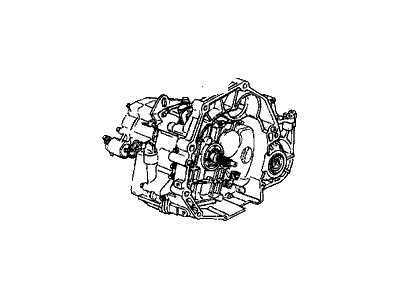
 Product Specifications
- Other Name: Transaxle
- Item Weight: 125.10 Pounds
- Item Dimensions: 22.2 x 20.0 x 20.0 inches
- Condition: New
- Fitment Type: Direct Replacement
- SKU: 20021-PL4-010
- Warranty: This genuine part is guaranteed by Honda's factory warranty.
 Product Specifications
- Other Name: Transaxle
- Item Weight: 57.30 Pounds
- Item Dimensions: 19.8 x 17.0 x 16.6 inches
- Condition: New
- Fitment Type: Direct Replacement
- SKU: 20011-PL3-F40
- Warranty: This genuine part is guaranteed by Honda's factory warranty.
- Product Specifications
- Item Weight: 56.80 Pounds
- Item Dimensions: 18.7 x 17.3 x 16.5 inches
- Condition: New
- Fitment Type: Direct Replacement
- SKU: 20011-PL3-E90
- Warranty: This genuine part is guaranteed by Honda's factory warranty.
- Product Specifications
- Item Weight: 57.30 Pounds
- Item Dimensions: 20.0 x 17.5 x 16.6 inches
- Condition: New
- Fitment Type: Direct Replacement
- SKU: 20011-PL3-E80
- Warranty: This genuine part is guaranteed by Honda's factory warranty.
- Product Specifications
- Item Weight: 60.60 Pounds
- Item Dimensions: 18.9 x 17.5 x 16.1 inches
- Condition: New
- Fitment Type: Direct Replacement
- SKU: 20011-PL3-E70
- Warranty: This genuine part is guaranteed by Honda's factory warranty.
- Product Specifications
- Other Name: Transaxle
- Item Weight: 55.00 Pounds
- Item Dimensions: 19.1 x 16.9 x 16.1 inches
- Condition: New
- Fitment Type: Direct Replacement
- SKU: 20011-PL3-C60
- Warranty: This genuine part is guaranteed by Honda's factory warranty.
1989 Honda CRX Transmission Assembly
Our website is the optimal online store for when you need any genuine 1989 Honda CRX Transmission Assembly. We offer a wide range of 1989 Honda CRX Transmission Assembly at unbeatable prices. We will help provide you with a worry-free shopping experience at highly competitive prices. In addition, all OEM parts are backed by the manufacturer's warranty.
1989 Honda CRX Transmission Assembly Parts Questions & Experts Answers
- Q:How Does the Transmission Assembly and Internal Combustion Engine Facilitate Smooth Operation on a 1989 Honda CRX?Posted by Scotty D.A:An internal combustion engine developed only ancillary torque at a particular narrow speed limit; that of modern overhead valve engines is around 2500 rpm with relative low torque at higher speeds. Overhead camshaft engines in general reach a higher torque value, but this value is typical for a narrower camshaft profile. While the transaxle is used in changing the relation of the engine speed to the wheel speed, the clutch in this Trotro model provides smooth engagements from rest due to mechanical slippage. The transaxle is used to shift gear speed ratios of between the engine and transmitting system to the wheels with 4 or 5 gear speed transmissions, where the lower gear allows full power from the engine during slow movement. The clutch drive plate is a thin disc splined in conjunction with the transaxle input shaft which has a brake lining like material that enables it to slip quietly. The clutch cover, secured on the engine flywheel, features for pressure engagement the diaphragm spring and encompasses the pressure plate while the driven disc is pinned between the two when the clutch pedal is released. Within the transaxle is a mainshaft that passes through the case and the distance between the front and rear portions allows them to rotate at different speeds, meanwhile power is shafted through a countershaft in first and second through fourth gears and reverse, with gears intermeshing to transfer power. The countershaft gears are an integral part of it, but some of the mainshaft gears may turn independently, or be locked to the shaft, with shifting mechanisms using internal dog clutch. The free travel on the clutch pedal must also be adjusted in order to minimize wear and slippage; some use hydraulic linkage. FWD can be described as a power distribution system where the transaxle serves the functions of both transmission and drive axle; whereas the coupling mechanisms between halfshafts are by means of open or constant velocity joints to enable movement to wheel.Answered by Honda Parts Specialist Gino / Dec 10, 2025
Related 1989 Honda CRX Parts
 1989 Honda CRX Torque Converter
 1989 Honda CRX Valve Body
 1989 Honda CRX Side Cover Gasket
 1989 Honda CRX Transmission Gasket