×
- Hello
- Login or Register
- Quick Links
- Live Chat
- Track Order
- Parts Availability
- RMA
- Help Center
- Contact Us
- Shop for
- Honda Parts
- Honda Accessories

My Garage
My Account
Cart
Genuine 1998 Honda Prelude Wheel Hub
Wheel Axle Hub- Select Vehicle by Model
- Select Vehicle by VIN
Select Vehicle by Model
orMake
Model
Year
Select Vehicle by VIN
For the most accurate results, select vehicle by your VIN (Vehicle Identification Number).
1 Wheel Hub found


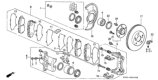
1998 Honda Prelude Front Hub Assembly
Part Number: 44600-S47-000$243.54 MSRP: $352.96You Save: $109.42 (31%)Product Specifications- Other Name: Front Hub; Hub, Hub Assembly
- Position: Front
- Item Weight: 6.90 Pounds
- Item Dimensions: 6.1 x 6.3 x 4.6 inches
- Condition: New
- Fitment Type: Direct Replacement
- Require Quantity: 2
- SKU: 44600-S47-000
- Warranty: This genuine part is guaranteed by Honda's factory warranty.
1998 Honda Prelude Wheel Hub
Our website is the optimal online store for when you need any genuine 1998 Honda Prelude Wheel Hub. We offer a wide range of 1998 Honda Prelude Wheel Hub at unbeatable prices. We will help provide you with a worry-free shopping experience at highly competitive prices. In addition, all OEM parts are backed by the manufacturer's warranty.
1998 Honda Prelude Wheel Hub Parts Questions & Experts Answers
- Q:How is the Rear Wheel Hub and Bearing Unit Replaced on a 1998 Honda Prelude?Posted by Marvelous A.A:The rear wheel bearing and hub unit are replaced as a unit. Begin by loosening the spindle nut with the vehicle on the ground, then raise and support the vehicle safely. Remove the rear wheels and the brake disc retaining screws. Unbolt the brake hose brackets from the knuckle, then remove the caliper bracket mounting bolts and hang the caliper out of the way with a piece of wire. Take off the brake disc, using two 8 x 1.25mm bolts if the disc is frozen on the hub to push it away. Remove the spindle nut and pull the hub unit off the spindle, cleaning the backing plate and mating surfaces of the brake disc and hub with brake cleaner, and the spindle, washer, and hub with solvent. Inspect the hub unit for damage or wear; if the bearings are worn, the entire unit must be replaced. Install the hub unit and spindle washer onto the spindle, then install the spindle nut without tightening it. Next, install the brake disc and tighten the retaining screws to 7 ft. lbs. (10 Nm), followed by the brake caliper, tightening the mounting bolts to 28 ft. lbs. (39 Nm) and the brake hose brackets to 16 ft. lbs. (22 Nm). Reinstall the rear wheels and lower the vehicle, then tighten the new spindle nut to 181 ft. lbs. (245 Nm) and stake it with a punch. Finally, tighten the wheel nuts to 80 ft. lbs. (108 Nm) and test the operation of the brakes. The wheel bearings are not adjustable or repairable and should be replaced if found defective.Answered by Honda Parts Specialist Emanuel / Nov 29, 2022
Related 1998 Honda Prelude Parts
 1998 Honda Prelude Wheel Stud
 1998 Honda Prelude Lug Nuts
 1998 Honda Prelude Wheel Bearing
 1998 Honda Prelude Spindle