×
- Hello
- Login or Register
- Quick Links
- Live Chat
- Track Order
- Parts Availability
- RMA
- Help Center
- Contact Us
- Shop for
- Honda Parts
- Honda Accessories

My Garage
My Account
Cart
Genuine Honda Passport Oil Pan
Oil Drain Pan- Select Vehicle by Model
- Select Vehicle by VIN
Select Vehicle by Model
orMake
Model
Year
Select Vehicle by VIN
For the most accurate results, select vehicle by your VIN (Vehicle Identification Number).
10 Oil Pans found
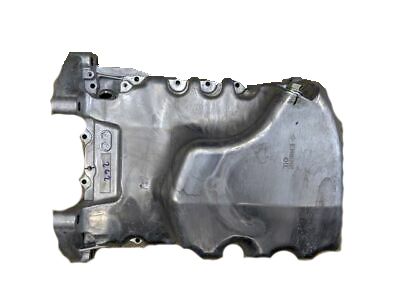
Honda Passport Pan Complete, Oil
Part Number: 11200-5J6-A11$222.61 MSRP: $322.61You Save: $100.00 (31%)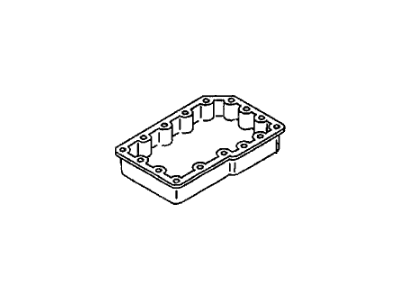

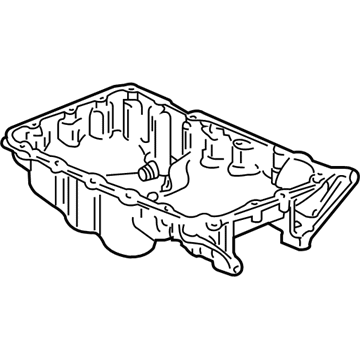
Honda Passport Oil Pan Assembly
Part Number: 8-96017-876-0$136.07 MSRP: $197.20You Save: $61.13 (31%)
Honda Passport Oil Pan Assembly
Part Number: 8-96016-562-0$136.07 MSRP: $197.20You Save: $61.13 (31%)Honda Passport Pan Assembly, At Oil
Part Number: 8-96016-554-0$136.07 MSRP: $197.20You Save: $61.13 (31%)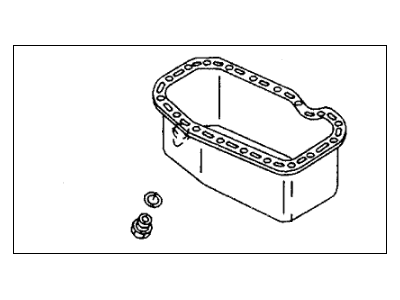

Honda Passport Oil Pan Assembly
Part Number: 8-94174-215-0$187.53 MSRP: $271.78You Save: $84.25 (31%)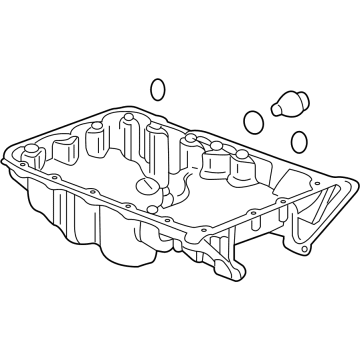
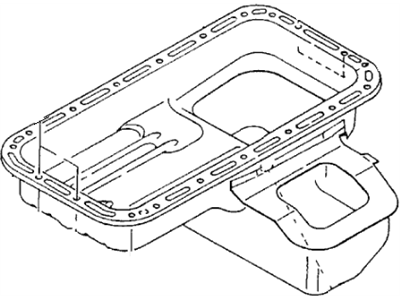

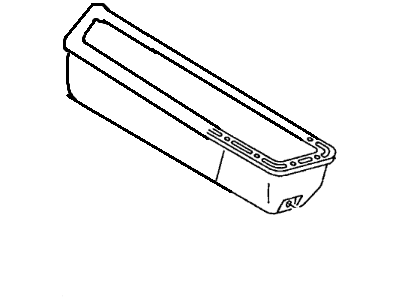

Honda Passport Oil Pan
The Oil Pan acts as a receptacle of the engine oil that is used in Honda Passport vehicles to lubricate and cool numerous parts of the engine. Similar to the wet sump system, the Oil Pan of Honda Passport captures the oil pulled by the pickup tube to the oil pump and circulates the same through the engine before returning it to the pan. This design ensures that there is a continuous supply of oil which is very vital for the performance for the engine. Original models of Honda Passport Oil Pans were made of stamped steel, but recent development has seen manufactures switch to using cast aluminum in order produce better models. As much as the function remains similar, the shift to better materials signals upgrades in performance and has proved capable of meeting demands posed by different driving conditions. In a nutshell, the Oil Pan plays a crucial role of maintaining the Honda Passport lubrication system and thus performance of the engine.
In search of affordable OEM Honda Passport Oil Pan? Consider browsing through our extensive inventory of genuine Honda Passport Oil Pan. Not only do we provide market-leading prices and a manufacturer's warranty, but we also pride ourselves on exceptional customer service and swift delivery.
Honda Passport Oil Pan Parts Questions & Experts Answers
- Q:How to remove and install an oil pan on 2.3L and 2.6L four cylinder engine on Honda Passport?A:Amigos with 2.3L engines are equipped with a one-piece oil pan, while 2.6L engines have a two-piece oil pan. Begin by draining the engine oil, then raise the front of the vehicle and support it on jackstands placed under the frame, applying the parking brake and blocking the rear wheels to prevent rolling. If equipped, remove the splash shield. For two-wheel-drive models, disconnect the steering idler arm and Pitman arm, then drop the center link and steering damper. For 4WD models, support the vehicle on jackstands, remove the front wheel, and lower the front axle with a jack if necessary for oil pan clearance. Next, remove the flywheel dust cover and detach the oil pan by removing the bolts, taking care not to pry between the block and the oil pan to avoid damaging the sealing surface, which could lead to oil leaks; use a block of wood and a hammer to dislodge the pan if it is stuck. Remove all traces of old gasket material and sealant from the block and oil pan using a scraper, and clean the gasket sealing surfaces with lacquer thinner or acetone, ensuring the bolt holes in the block are clean. Check the oil pan flange for distortion, especially around the bolt holes, and if needed, place the pan on a block of wood and use a hammer to flatten and restore the gasket surface. For 2.3L engines, use a one-piece oil pan gasket, while 2.6L engines require ATV sealant; apply a thin coat of ATV sealant to the flange and corners of the engine block before attaching the new gasket to the pan, ensuring the bolt holes are aligned. Position the oil pan against the engine block, installing the two stiffener plates and the mounting bolts, nuts, and lockwashers for 2.3L engines, or just the mounting bolts for 2.6L models, tightening them to the specified torque in a criss-cross pattern. After waiting at least 30 minutes before filling the engine with oil, start the engine and check for leaks.
Related Honda Passport Parts
 Honda Passport Oil Filter
 Honda Passport Rod Bearing
 Honda Passport Oil Pump
 Honda Passport Oil Pressure Switch
 Honda Passport Dipstick
 Honda Passport Crankshaft Pulley
 Honda Passport Oil Cooler
 Honda Passport Drain Plug
 Honda Passport Drain Plug Washer
 Honda Passport Crankshaft Thrust Washer Set
 Honda Passport Dipstick Tube