×
- Hello
- Login or Register
- Quick Links
- Live Chat
- Track Order
- Parts Availability
- RMA
- Help Center
- Contact Us
- Shop for
- Honda Parts
- Honda Accessories

My Garage
My Account
Cart
Genuine Honda Del Sol Cylinder Head
Head- Select Vehicle by Model
- Select Vehicle by VIN
Select Vehicle by Model
orMake
Model
Year
Select Vehicle by VIN
For the most accurate results, select vehicle by your VIN (Vehicle Identification Number).
19 Cylinder Heads found
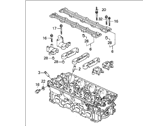
Honda Del Sol Cylinder Head General Assembly
Part Number: 10003-P2T-G01$2505.04 MSRP: $3380.61You Save: $875.57 (26%)Honda Del Sol Cylinder Head General Assembly
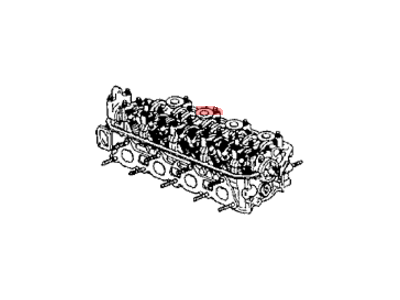
Part Number: 10003-P2T-G00$2505.04 MSRP: $3380.61You Save: $875.57 (26%)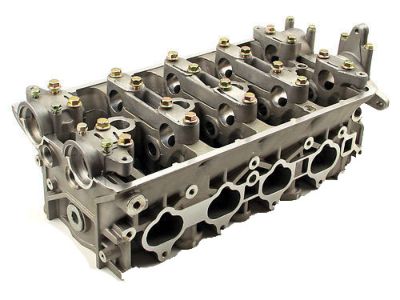
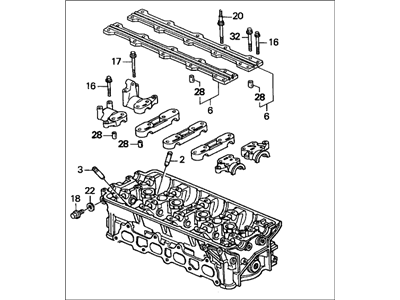
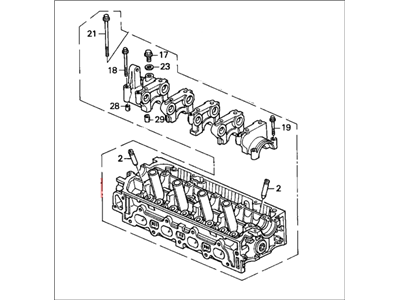
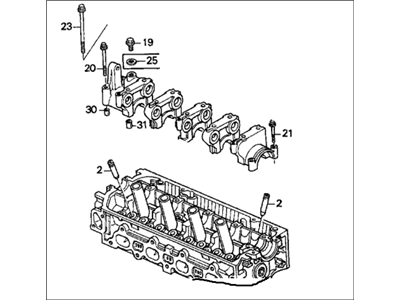
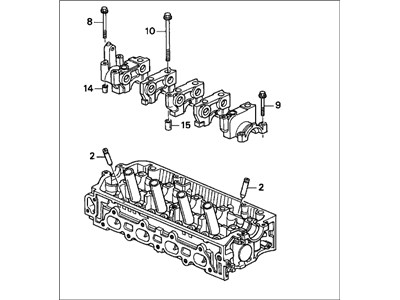
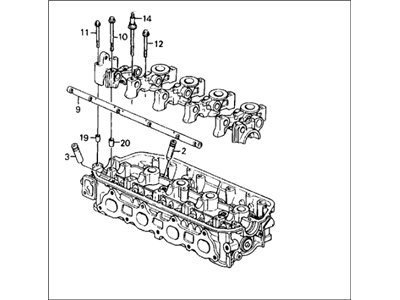
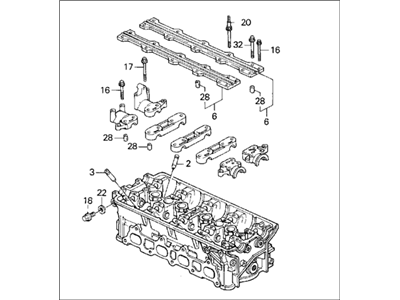
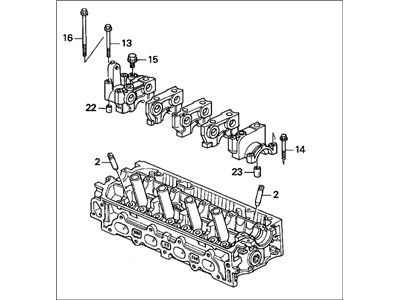
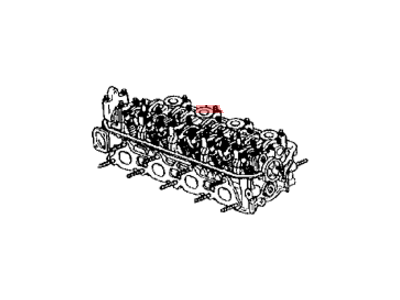
Honda Del Sol Cylinder Head
The Honda Del Sol Cylinder Head directs the air fuel mixture in, allows the exhaust to escape, and seals combustion to ensure the sporty coupe performs well. Sitting above the cylinders, this Cylinder Head contains spark plugs and essential valves as well as internal oil and coolant passages to control the heat. Every single Honda powerplant in the Del Sol is dependent on a precisely machined Cylinder Head surface to mate with the gasket. Across the production run, Del Sol versions had mostly lightweight aluminum Cylinder Head castings that shed heat faster and reduce mass, though some early trims still applied heavier iron Cylinder Head units. The aluminum style will have the advantage of higher compression and reshaped ports for smoother flow, which increases horsepower, while the iron option is more durable but heavier and hotter. Regardless of the material, Honda specifies torque to yield head bolts that stretch once to provide even clamping and the Cylinder Head gasket seal. Ignoring this can lead to leaks, which will drain compression and cause the engine to overheat or cause coolant and oil to mix, not problems every Honda driver would like to avoid in an adored Del Sol.
In search of affordable OEM Honda Del Sol Cylinder Head? Consider browsing through our extensive inventory of genuine Honda Del Sol Cylinder Head. Not only do we provide market-leading prices and a manufacturer's warranty, but we also pride ourselves on exceptional customer service and swift delivery.
Honda Del Sol Cylinder Head Parts Questions & Experts Answers
- Q:Are new and rebuilt cylinder heads commonly available for most engines at dealer parts departments and auto parts stores on Honda Del Sol?A:Several new and rebuilt cylinder heads are easily accessible for most engines from the dealer parts division, and auto-part shops. Because some disassembly and inspection tools might be required, as well as replacement parts may not be readily accessible, the home mechanic might find it more convenient and cost-effective to buy replacements for heads and so on, instead of taking apart and inspecting, not to mention reconditioning, the originals. To perform cylinder head disassembly, it is necessary to remove intake and Exhaust Valves and other related parts; as for the rocker arm assemblies and the camshaft, they should be removed, too. One has to ensure that the part is well labeled or has to ensure that the part is kept separately for rebinding at its rightful place. When you plan on removing the valves, it is worthy to label and store the valves and their bits in a more systematic manner. Sometimes it may be required to compress the springs on the first valve using a spring compressor, to remove the keepers by using a magnet or small needle-nose pliers and then by slowly releasing the compressor to finally remove the retainer, spring and the spring seat if any. Turn the valve out of the head and unscrew the oil seal from the guide; if it sticks, screw the valve back in and file the bearing surface and the keeper groove around the stem. This action must be done to the rest of the valves, keeping all the parts of each valve in a unified lot to facilitate rejoining later. As for the VTEC engines, be sure to sure to disconnect the Oil Control Orifice and O-ring s from the cylinder head. Pull all the valves and other associated parts from the head and neutrally clean it before all cleaning and inspection processes if a complete engine rebuild is being performed on the block before beginning the valve shims and lapping processes.