×
- Hello
- Login or Register
- Quick Links
- Live Chat
- Track Order
- Parts Availability
- RMA
- Help Center
- Contact Us
- Shop for
- Honda Parts
- Honda Accessories

My Garage
My Account
Cart
Genuine Honda Del Sol Crankshaft
Crank Shaft- Select Vehicle by Model
- Select Vehicle by VIN
Select Vehicle by Model
orMake
Model
Year
Select Vehicle by VIN
For the most accurate results, select vehicle by your VIN (Vehicle Identification Number).
4 Crankshafts found
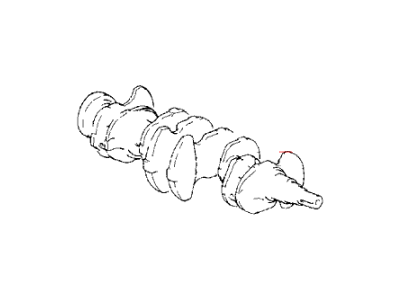
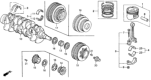
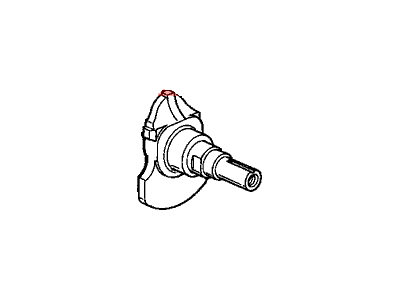
Honda Del Sol Crankshaft
Honda Del Sol Crankshaft transforms the up-and-down motion of the pistons into the constant rotation that turns the wheels while providing the sporty coupe with its eager feel. In every Honda engine bay, the Crankshaft is mounted deep within the engine block, with crankpins to connecting rods to make reciprocating power turn into rotational power. Made of steel or cast iron, each Crankshaft begins with the process of forging, casting, or precise machining, which combines strength with lightness. For the Del Sol line, there were both early VTEC and non-VTEC trims that shared the design, but forged pieces were applied in higher-revving editions, with cast units applied for daily drivers, which is a bit of a split and is indicative of how one Crankshaft style is better suited to constant high rpm. Regardless of version, the Crankshaft remains susceptible to damage if debris gets in, and owners should be on the lookout for vibration that indicates bending or scoring. Replacing the part ensures smooth motion again and protects the rest of the Honda powertrain, proving that a healthy Del Sol Crankshaft is vital to engine life. This balance helped Honda keep the nimble spirit drivers expect from every Del Sol.
In search of affordable OEM Honda Del Sol Crankshaft? Consider browsing through our extensive inventory of genuine Honda Del Sol Crankshaft. Not only do we provide market-leading prices and a manufacturer's warranty, but we also pride ourselves on exceptional customer service and swift delivery.
Honda Del Sol Crankshaft Parts Questions & Experts Answers
- Q:How to ensure the crankshaft oil holes are properly prepared and the crankshaft is in good condition before reassembly on Honda Del Sol?A:Remove all burrs from the crankshaft oil holes with a stone, file, or scraper to ensure the oil holes are chamfered, preventing sharp edges from gouging or scratching the new bearings. Clean the crankshaft with solvent and dry it with compressed air if available. Check the main and connecting Rod Bearing journals for uneven wear, scoring, pits, and cracks. Rub a penny across each journal several times; if copper rubs off and embeds in the crankshaft, the journals should be reground. Inspect the rest of the crankshaft for cracks and other damage, using magnaflux to reveal hidden cracks, which an automotive machine shop can handle. Measure the diameter of the main and connecting rod journals with a micrometer, comparing results at several points to detect taper and out-of-round conditions. If the journals are damaged, tapered, out-of-round, or worn beyond limits, have the crankshaft reground by an automotive machine shop, ensuring the correct size bearing inserts are used if reconditioned. Check the oil seal journals at each end of the crankshaft for wear and damage; if grooves, nicks, or scratches are present, new seals may leak upon reassembly. An automotive machine shop may repair the journal by pressing on a thin sleeve, but if repair isn't feasible, a new or different crankshaft should be installed. Finally, examine the main and rod bearing inserts.